Benefits and Risks of Reverse Inclusion for Preschoolers with and without Disabilities: Perspectives of Parents and Providers
Rafferty & Griffin
Study design: This research design consists of surveys given to teachers and related service providers in a reverse inclusion preschool program and the parents of the preschoolers (with and without disabilities) in the program.
Participants/sample: 118 teachers and related service providers working on private, community-based reverse inclusion preschool program. Also 161 parents of preschoolers with disabilities and 76 parents of preschoolers who are typically developing in the same program were part of the sample (383 surveys went home to parents, only 237 returned the surveys).
Data collection methods: The researchers gave an envelope with a survey, a return envelope, and a cover letter to each teacher and related service providers. Then the same survey, with return envelope and cover letter were sent home to all parents. A reminder package was sent 2 weeks later. Two scales were developed for the survey. The participants reported to the extent they agreed or disagreed with each item.
Data analysis: The researchers used Analysis of variance techniques to compare the total mean score of the teachers/providers to the parent groups on each attitude measure. Analysis of variance techniques were also used to examine attitudes towards inclusion by job category. Chi-square tests were used to compare providers’ and parents’ attitudes for hypothetical children with various types of disabilities and severity. Zero-order correlations between demographic characteristics of providers and their scores on each attitude were presented.
Conclusions: Parents and providers are concerned about staff training and adequacy of resources. Also providers should be concerned about what the parents concerns about inclusion and address them. Increase the knowledge of staff to work with certain students is wanted. Information on effective inclusion practices to the providers. For an inclusion program to be supportive of both students with special needs and students without the program quality needs to be acceptable and appropriate services are being provided.
The conclusions are valid for this particular program. If the sampling group was bigger and the location was not just one specific program (suburban area in New York State) there may have been different answers. This study would be able to be more generalize to all reverse inclusion settings. This seems to be a very large reverse inclusion program and they received a good response. It would be interested to see responses from other reverse inclusion programs in different states.
Elements of Successful Inclusion for Children with Significant Disablities
Cross, Traub, Hutter-Pishgahi, & Shelton
Study design: Qualitative research design, this study took place over a long period of time (2 to 6 months to collect data for each site). The researchers were flexible and it took place in the participants’ natural environment. Detailed interviews and follow-ups also occurred with this study.
Participants/sample: 7 young children who meet the criteria had been identified. Parents and providers were interesting in participating in the study; a researcher went out to the setting to confirm it would meet the criteria for the study. The participants are the providers who provide services, supports, and education to the 7 students with disabilities. 43 interviews took place with therapists, ECSE/ECE teaching staff, and family members.
Data collection methods: Interviews, observations of the normal routines, and written records. Each researcher took sole responsibility for one or more sites. Interview included open-ended questions and probes, and lasted between 45-90 minutes. Each interview was tape-recorded or documented with hand-written notes. Interviews were also followed-up with phone calls, emails, and site visits. 3 to 5 observations took place for each child, at each site. The observations were about 2 hours long. There was no interaction with the researcher during the observations. Data collected varied by setting. Data collection included IEP/IFSP goals, outcomes, and accommodations, parent-provider communication books, posted notes in classroom, and program descriptions. The data collection was photocopied or documented in hand written notes.
Data analysis: The researchers used coding, data display, and pattern coding to analysis their data. They used data triangulation and investigator triangulation. They used 3 stages to analysis the data. The first stage was meeting of the research team to review coding strategies, emerging clumps of data, and associate labels. The second was to identify the dominant elements of practice in the coded content, using investigator triangulation. The third stage an in-depth examination of each element.
Conclusions: Four elements associated with successful inclusion of children with significant disabilities: attitudes, parent-provider relationships, therapeutic intervention, and adaptations. Each child’s success in inclusion involved a large number of adults. Parents, therapists, and teachers need to work together to ensure inclusion is successful for that child and they need to be able to be flexible in the setting. To include children with significant disabilities in community settings requires looking into their services, goals, and placements to ensure the benefits for successful inclusion can go passed the early childhood years of the child.
The conclusion is valid of the study design. The researchers had a specific criterion they were looking for when starting this study. They reminded flexible to what they found and used triangulation to link all the data together to come to their conclusions. The settings used in this study were different but still the same where they were all inclusion settings. Each researcher took one at least one setting or more and no other researcher conducted interview/observations at that particular site, it did not change the perspective of someone else who did not know the situation (child). This helped to validate the conclusion based on this qualitative study.
references
Griffin, K.W., and Rafferty, Y. (2005). Benefits and Risks of Reverse Inclusion for Preschoolers with and without Disabilities: Perspectives of Parents and Providers. Journal of Early Intervention. 27. 173-192. doi: 10.1177/105381510502700305
Cross, A.F., Hutter-Pishgahi, L., Shelton, G., & Traub, E.K. (2004). Elements of Successful Inclusion for Children with Significant Disabilities. Topics in Early Childhood Special Education, 24(3) 169- 83.
Showing posts with label reverse inclusion. Show all posts
Showing posts with label reverse inclusion. Show all posts
Tuesday, March 23, 2010

Monday, February 15, 2010
Participants and Sampling
Research Problem: What are the outcomes of a reverse inclusion setting for meeting preschoolers with disabilities goals and objectives?
How would I now select participants to help address this problem? I would need to have students with disabilities participating in reverse inclusion settings because I am looking to see what the outcomes of their goals and objectives are based on their setting.
~ Probability sampling:
o Cons:
- Unknown probability of sampling
- May not have a large number of students to work with or select from
- Access
- Time
- Resource
- Financial constraints
o Pros:
- Random selected participates
- Quantitative study
~ Non-probability sampling:
o Cons:
- Not as random
- Limited generalization
o Pros:
- More useful participates
- Availability to the researcher
- Different types of sampling techniques: typical, extreme, maximum, snowball,
critical case.
- More relevant to qualitative studies
For my particular study I would use the non-probability sampling procedure. The different sampling techniques in the non-probability sampling are more relevant to my study. Due to access to students with disabilities in a reverse inclusion classroom I would look at using the purposive sampling. The reverse inclusion classrooms are not very common. I would need to find particular school systems that have this program. Once those systems are identified I would need to get in contact with the classroom teacher, and possibly parents of participants in the study. There would also be a chance to use the snowball technique to find the participants just by word of mouth. Using the critical case sampling technique would also be idea to use to find participants. The sampling would also depend on the parents’ willingness to have their child be a participant.
How would I now select participants to help address this problem? I would need to have students with disabilities participating in reverse inclusion settings because I am looking to see what the outcomes of their goals and objectives are based on their setting.
~ Probability sampling:
o Cons:
- Unknown probability of sampling
- May not have a large number of students to work with or select from
- Access
- Time
- Resource
- Financial constraints
o Pros:
- Random selected participates
- Quantitative study
~ Non-probability sampling:
o Cons:
- Not as random
- Limited generalization
o Pros:
- More useful participates
- Availability to the researcher
- Different types of sampling techniques: typical, extreme, maximum, snowball,
critical case.
- More relevant to qualitative studies
For my particular study I would use the non-probability sampling procedure. The different sampling techniques in the non-probability sampling are more relevant to my study. Due to access to students with disabilities in a reverse inclusion classroom I would look at using the purposive sampling. The reverse inclusion classrooms are not very common. I would need to find particular school systems that have this program. Once those systems are identified I would need to get in contact with the classroom teacher, and possibly parents of participants in the study. There would also be a chance to use the snowball technique to find the participants just by word of mouth. Using the critical case sampling technique would also be idea to use to find participants. The sampling would also depend on the parents’ willingness to have their child be a participant.
Monday, February 8, 2010
How to conduct and write an education literature review
When I first started my literature review, I knew it would be difficult to find studies and articles about reverse inclusion. I took a look at my question and refined it a little: What are the outcomes of a reverse inclusion setting for meeting preschoolers with disabilities goals and objectives? After refining my question I sat down and thought about different key terms that would come out of this: reverse inclusion, preschoolers with disabilities, Early Childhood, inclusion, mainstreaming, reverse mainstreaming, Least Restrictive Environment, peer modeling. Once I had a list together I then identify databases I would use to help find different texts, journals, and studies.


When searching databases I like to use EBSCOhost, so I can select many databases and search them at the same time. I am able to use the advanced search options to narrow down my results. I also make sure that the articles are coming from peer-reviewed journals. After setting my advance search settings I began to put my key terms into the search box. If the search terms were too narrow or too general I choose other search terms from the list that I have complied. I would look through some of the reviews and find more key terms. I also looked at the authors and references. If there was a name that would repeat several times I would also search the name as an author with another descriptor like inclusion. After getting a nice selection of articles/studies I began to go through each one. I tried to find the articles any way possible, most were available online, others I will have to go to the VCU library or by using the inter library loan system. I have complied a list of articles to go look for at the VCU library.
Here are a few images of what I was seeing when I was searching the databases:
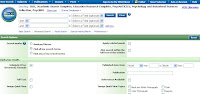
The first one is of what EBSCOhost advance search options look like.

The second image is a list of more descriptors that I could add to my list of key terms.

The third is when I was previewing the abstracts, it would state what kind of publication and what kind of document.
This is where I am in my literature review. The next thing I am going to do is go through each piece of literature I have gathered and identify which is a a primary or secondary source. Then I will take each primary source summarize the information. Along the way I will be documenting each piece in a chart so it will be easy for me to find when I go to put it into my review. After summarizing each piece I will organize the pieces based on their topics. I am hoping to write the review by grouping the pieces by policy of reverse inclusion, the practice of reverse inclusion, and what research is already out there about reverse inclusion. At the end I will tie everything together and explain why my research question of: What are the outcomes of a reverse inclusion setting for meeting preschoolers with disabilities goals and objectives?
**note: The use of the Internet is an amazing then when you are snowed in and can't get any where! I am just lucky I didn't lose electricity during the snow storms.**


When searching databases I like to use EBSCOhost, so I can select many databases and search them at the same time. I am able to use the advanced search options to narrow down my results. I also make sure that the articles are coming from peer-reviewed journals. After setting my advance search settings I began to put my key terms into the search box. If the search terms were too narrow or too general I choose other search terms from the list that I have complied. I would look through some of the reviews and find more key terms. I also looked at the authors and references. If there was a name that would repeat several times I would also search the name as an author with another descriptor like inclusion. After getting a nice selection of articles/studies I began to go through each one. I tried to find the articles any way possible, most were available online, others I will have to go to the VCU library or by using the inter library loan system. I have complied a list of articles to go look for at the VCU library.
Here are a few images of what I was seeing when I was searching the databases:

The first one is of what EBSCOhost advance search options look like.

The second image is a list of more descriptors that I could add to my list of key terms.

The third is when I was previewing the abstracts, it would state what kind of publication and what kind of document.
This is where I am in my literature review. The next thing I am going to do is go through each piece of literature I have gathered and identify which is a a primary or secondary source. Then I will take each primary source summarize the information. Along the way I will be documenting each piece in a chart so it will be easy for me to find when I go to put it into my review. After summarizing each piece I will organize the pieces based on their topics. I am hoping to write the review by grouping the pieces by policy of reverse inclusion, the practice of reverse inclusion, and what research is already out there about reverse inclusion. At the end I will tie everything together and explain why my research question of: What are the outcomes of a reverse inclusion setting for meeting preschoolers with disabilities goals and objectives?
Monday, February 1, 2010
Quantative/qualitative questions about Reverse Inclusion
Reverse Inclusion:
Quantitative: What are the advantages of reverse inclusion compared to full inclusion for preschoolers with special needs?
Qualitative: How does reverse inclusion effect preschoolers with special needs in meeting their annual goals and objectives?
The quantitative research question is specific and you are able to research the problem. The importance of this situation reflects the Virginia special education state performance plan indicators, specifically indicator 6: preschool least restrictive environment (retrieved from VA DOE website). The state performance plan lists a number of different types of settings that preschoolers with disabilities can be included with their typically developing peers. These settings include full inclusion, part time ECSE (early childhood special education) and part time ECE (early childhood education) and reverse inclusion. The state is already collecting data on how many students are being included with their typically developing peers and the percentage of the time they are being included with their peers. This question would compare two of the settings (reverse inclusion to full inclusion) and look at the advantages for preschoolers with special needs. This question also asks specifically for the advantages of reverse inclusion.
The qualitative research question will has the focus of reverse inclusion, but it is more general in how it just effects preschoolers with special needs in meeting their annual goals and objectives. The effects are determined by the preschoolers in how they are meeting their goals and objectives in a reverse inclusion classroom. It also states in the question who is to participate (preschoolers with special needs) and where they study should be held (reverse inclusion classroom). Stating that you are looking for the effects from reverse inclusion leaves the question able to go either direction of positive or negative affects to the students and not looking for any specific outcome. This problem could also evolve into many other questions depending of the outcome of the study.
http://www.doe.virginia.gov/data_collection/special_education/performance/indicators_targets.pdf
Quantitative: What are the advantages of reverse inclusion compared to full inclusion for preschoolers with special needs?
Qualitative: How does reverse inclusion effect preschoolers with special needs in meeting their annual goals and objectives?
The quantitative research question is specific and you are able to research the problem. The importance of this situation reflects the Virginia special education state performance plan indicators, specifically indicator 6: preschool least restrictive environment (retrieved from VA DOE website). The state performance plan lists a number of different types of settings that preschoolers with disabilities can be included with their typically developing peers. These settings include full inclusion, part time ECSE (early childhood special education) and part time ECE (early childhood education) and reverse inclusion. The state is already collecting data on how many students are being included with their typically developing peers and the percentage of the time they are being included with their peers. This question would compare two of the settings (reverse inclusion to full inclusion) and look at the advantages for preschoolers with special needs. This question also asks specifically for the advantages of reverse inclusion.
The qualitative research question will has the focus of reverse inclusion, but it is more general in how it just effects preschoolers with special needs in meeting their annual goals and objectives. The effects are determined by the preschoolers in how they are meeting their goals and objectives in a reverse inclusion classroom. It also states in the question who is to participate (preschoolers with special needs) and where they study should be held (reverse inclusion classroom). Stating that you are looking for the effects from reverse inclusion leaves the question able to go either direction of positive or negative affects to the students and not looking for any specific outcome. This problem could also evolve into many other questions depending of the outcome of the study.
http://www.doe.virginia.gov/data_collection/special_education/performance/indicators_targets.pdf
Subscribe to:
Posts (Atom)
